


Valorisation of food residues: waste to wealth using green chemical technologies
Corresponding author: Emerson L Schultz emerson.schultz@embrapa.br
Embrapa Agroenergy, Parque Estação Biológica, PqEB s/n – Av.W3 Norte (final), Brasília, 70770-901, DF, Brazil
Chemical and Biological Technologies in Agriculture 2014, 1:7 doi:10.1186/s40538-014-0007-z

Abstract
According to estimates from the International Energy Agency, global energy consumption will increase by at least one third, between 2010 and 2035. The additional power required will be provided not only by fossil sources but also by renewables. While the world energy matrix is supplied only by 13.2% from renewable sources, Brazil has different scenery with renewables accounting for 42.4% of the energy matrix. This work aimed to evaluate the potential use of oleaginous in biorefineries considering the produced quantity, prices, and costs of raw materials and products. Considering the availability of these raw materials, the results showed significant opportunities that can be exploited in Brazil, within the biorefinery concept. Soybean oil is the main raw material for biodiesel production in Brazil, although there are many other vegetable oils with potential for this purpose. Related to the production costs, the soybean biodiesel has higher costs than diesel. Then, this biofuel is only produced due to Brazilian regulatory rules and public subsidies. In order to become this production favorable in the market environment, it is essential to aggregate value to all byproducts and residues generated along the biodiesel production chain. Glycerin is a byproduct of biodiesel that could be used, in a glycerol biorefinery concept, as raw material for the production of value-added products through chemical, biochemical, or thermochemical routes.
Keywords: Biorefinery; Oleaginous; Soybean; Biodiesel; Glycerin; Biofuels; Chemicals; Energy; Prices and costs
The electronic version of this article is the complete one and can be found online at: http://www.chembioagro.com/content/1/1/7
image source: Texas A&M And University of Arkansas Work Cooperatively To Improve Soybean Crops
Embrapa Agroenergy, Parque Estação Biológica, PqEB s/n – Av.W3 Norte (final), Brasília, 70770-901, DF, Brazil
Chemical and Biological Technologies in Agriculture 2014, 1:7 doi:10.1186/s40538-014-0007-z
Abstract
According to estimates from the International Energy Agency, global energy consumption will increase by at least one third, between 2010 and 2035. The additional power required will be provided not only by fossil sources but also by renewables. While the world energy matrix is supplied only by 13.2% from renewable sources, Brazil has different scenery with renewables accounting for 42.4% of the energy matrix. This work aimed to evaluate the potential use of oleaginous in biorefineries considering the produced quantity, prices, and costs of raw materials and products. Considering the availability of these raw materials, the results showed significant opportunities that can be exploited in Brazil, within the biorefinery concept. Soybean oil is the main raw material for biodiesel production in Brazil, although there are many other vegetable oils with potential for this purpose. Related to the production costs, the soybean biodiesel has higher costs than diesel. Then, this biofuel is only produced due to Brazilian regulatory rules and public subsidies. In order to become this production favorable in the market environment, it is essential to aggregate value to all byproducts and residues generated along the biodiesel production chain. Glycerin is a byproduct of biodiesel that could be used, in a glycerol biorefinery concept, as raw material for the production of value-added products through chemical, biochemical, or thermochemical routes.
Keywords: Biorefinery; Oleaginous; Soybean; Biodiesel; Glycerin; Biofuels; Chemicals; Energy; Prices and costs
The electronic version of this article is the complete one and can be found online at: http://www.chembioagro.com/content/1/1/7
image source: Texas A&M And University of Arkansas Work Cooperatively To Improve Soybean Crops

The Kardashian index: a measure of discrepant social media profile for scientists
Correspondence: Neil Hall neil.hall@liverpool.ac.uk
Centre for Genomic Research, University of Liverpool, Liverpool L69 7ZB, UK
Genome Biology 2014, 15:424 doi:10.1186/s13059-014-0424-0

Abstract
In the era of social media there are now many different ways that a scientist can build their public profile; the publication of high-quality scientific papers being just one. While social media is a valuable tool for outreach and the sharing of ideas, there is a danger that this form of communication is gaining too high a value and that we are losing sight of key metrics of scientific value, such as citation indices. To help quantify this, I propose the ‘Kardashian Index’, a measure of discrepancy between a scientist’s social media profile and publication record based on the direct comparison of numbers of citations and Twitter followers.
The electronic version of this article is the complete one and can be found online at: http://genomebiology.com/2014/15/7/424
image source: http://oncirculation.com/2013/08/14/social-media-and-science/
Centre for Genomic Research, University of Liverpool, Liverpool L69 7ZB, UK
Genome Biology 2014, 15:424 doi:10.1186/s13059-014-0424-0
Abstract
In the era of social media there are now many different ways that a scientist can build their public profile; the publication of high-quality scientific papers being just one. While social media is a valuable tool for outreach and the sharing of ideas, there is a danger that this form of communication is gaining too high a value and that we are losing sight of key metrics of scientific value, such as citation indices. To help quantify this, I propose the ‘Kardashian Index’, a measure of discrepancy between a scientist’s social media profile and publication record based on the direct comparison of numbers of citations and Twitter followers.
The electronic version of this article is the complete one and can be found online at: http://genomebiology.com/2014/15/7/424
image source: http://oncirculation.com/2013/08/14/social-media-and-science/
Creativity from Hong Kong arrives KickStarter - Umbrella Here - Light up your umbrella for sharing

Forget bringing an umbrella is not uncommon in Hong Kong. In Singapore, all taxi will be occupied and you will be trapped together with hopeless. I believe this will be the same case in your city. Let's take a look how this Hong Kong's innovation helps solving this problem.
Umbrella Here - Light up your umbrella for sharing
"Umbrella Here is a light that can be attached on an umbrella. It is controlled by a mobile app that tells people that this umbrella is available for sharing. Just like the light you would see on a taxi. When the light is on, it represents that strangers are welcome to come in and share your umbrella."
I hope this really help.
Learn more about this invention: http://www.umbrellahere.com/#design
Tag :
kickstarter,
startups,
Methane hydrate from the ocean

There is an article from NBC this morning "Climate Bomb? Methane Vents Bubble on Seafloor off east Coast: Study". It reports the possible methane leakage at the Altantic Ocean along the U.S. East Coast. The phase "Climate BOMB" caught my eyes. Definitely, on the bright side, scientists and engineers have been trying to catch this "BUBBLES" for our daily energy consumption.
Here is another article suggested about methane hydrates from BBC:
Methane hydrate: Dirty fuel or energy saviour?
Here are brief summaries about methane hydrates:
Climate change impacts on methane hydrates [worldoceanreview.com]
Methane Hydrates and Contemporary Climate Change [Nature.com]
Towards Safer, More Comfortable Living through Shimizu's Sustained, Long-Term Research Efforts [www.shimz.co.jp]
More about Methane Hydrate on Youtube:
Methane hydrate the clean fuel of the future?
Japan successfully extracts gas from offshore methane hydrate
Did Methane Cause Mass Extinction? HD
image source: www.oilfreefun.com/2013/02/methane-hydrate-releases-geoengineering.html, www.nature.com/scitable/knowledge/library/methane-hydrates-and-contemporary-climate-change-24314790
A stamp collection celebrating the International Year of Crystallography 2014
Interesting stamp collection about international year of crystallography

Portugal




Switzerland

Slovak

Belgium

Israel

India
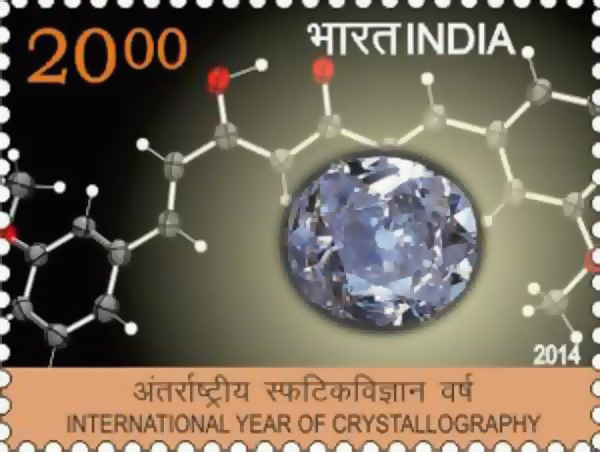
Moldavia


Liechtenstein


Austria

UK

Image source: PDB, http://www.iycr2014.org/
Crystallography? maybe a photo competition helps to explain crystallography in your daily life
Do you know what is crystallography? Do you the year 2014 is the International Year of Crystallography 2014?

If you don't know what is crystallography, the follow articles are suggested:
Crystallography: Atomic secrets, NATURE
More on Youtube:
Celebrating Crystallography - An animated adventure
Understanding Crystallography - Part 1: From Proteins to Crystals
Understanding Crystallography - Part 2: From Crystals to Diamond
There are a lot of activities around to the world this year to celebrate the International Year of Crystallography 2014. A photo contest - Crystallography in Everyday Life - was completed successfully and the first prize was announced: Gingerbread Men and Ice Crystals won the Agilent Prize:


Want to see more:
image source: http://www.iycr2014.org/participate/photo-competition
A brain-inspired computer & a IBM chip with NO clock
See how IBM redefine information processing with a cognitive chip - TrueNorth.

"Unlike the prevailing von Neumann architecture—but like the brain—TrueNorth has a parallel, distributed, modular, scalable, fault-tolerant, flexible architecture that integrates computation, communication, and memory and has no clock."
features at a glance:
"The architecture can solve a wide class of problems from vision, audition, and multi-sensory fusion, and has the potential to revolutionize the computer industry by integrating brain-like capability into devices where computation is constrained by power and speed" - Dharmendra Modha, IBM Fellow
see more:
Introducing a Brain-inspired Computer
Brain Power
Cognitive computing
IBM Research Creates New Foundation to Program SyNAPSE Chips
image source: http://www.research.ibm.com/articles/brain-chip.shtml
"Unlike the prevailing von Neumann architecture—but like the brain—TrueNorth has a parallel, distributed, modular, scalable, fault-tolerant, flexible architecture that integrates computation, communication, and memory and has no clock."
features at a glance:
- One million individually programmable neurons--sixteen times more than the current largest neuromorphic chip
- 256 million individually programmable synapses on chip which is a new paradigm
- 5.4B transistors. By device count, largest IBM chip ever fabricated, second largest (CMOS) chip in the world
- 4,096 parallel and distributed cores, interconnected in an on-chip mesh network
- Over 400 million bits of local on-chip memory (~100 Kb per core) to store synapses and neuron parameters
"The architecture can solve a wide class of problems from vision, audition, and multi-sensory fusion, and has the potential to revolutionize the computer industry by integrating brain-like capability into devices where computation is constrained by power and speed" - Dharmendra Modha, IBM Fellow
see more:
Introducing a Brain-inspired Computer
Brain Power
Cognitive computing
IBM Research Creates New Foundation to Program SyNAPSE Chips
image source: http://www.research.ibm.com/articles/brain-chip.shtml
Article Collection: Spotlight on Breast Cancer
Guest edited by Debu Tripathy tripathy@med.usc.edu
University of Southern California, Keck School of Medicine, USC/Norris Comprehensive Cancer Center, 1441 Eastlake Avenue, NTT-3429, Los Angeles 90033, CA, USA
This article collection in BMC Medicine aims to highlight the latest progress in breast cancer risk profiling, detection and treatment, as well as the long-term issues faced by those surviving breast cancer. We are seeking submissions of research articles covering all areas of breast cancer medicine, including clinical studies of new therapies, molecular genomics and translational advances. If you have any research you would like us to consider for inclusion in this article collection, please email bmcmedicineeditorial@biomedcentral.com.

"Breast cancer is the most common cancer type in women worldwide, with around 1.5 million new cases diagnosed every year. Despite the high incidence, advances in detection and treatment in recent years mean that more women than ever are surviving breast cancer, with an 89% 5-year survival rate in Western countries. Although men can also be affected, male breast cancer is very rare, accounting for less than 1% of all cancer in men.
Advances in molecular subtyping of breast cancer and the development of targeted therapies have greatly impacted breast cancer survival rates, and many clinical trials are now underway to determine the best therapeutic strategy for those with different types of breast cancer, as well as in the pre- and post-surgical setting. Although breast cancer risk increases greatly with age, around 7% of all cases occur in women under 40, and there are unique issues facing younger women with breast cancer, such as long-term treatment effects and the impact on fertility. As people are living longer with breast cancer, clinicians are increasingly recognizing the impact of disease prognosis and treatment on quality of life, with ongoing efforts aimed at defining the optimal treatment strategy for individual patients."
Forum
Next generation sequencing and tumor mutation profiling: are we ready for routine use in the oncology clinic?
Debu Tripathy, Kathleen Harnden, Kimberly Blackwell, Mark Robson
BMC Medicine 2014, 12:140 (12 August 2014)
Minireview
Strategies to overcome trastuzumab resistance in HER2-overexpressing breast cancers: focus on new data from clinical trials
Pernelle Lavaud, Fabrice Andre
BMC Medicine 2014, 12:132 (12 August 2014)
Question and Answer
Advances in treating HER2-positive breast cancer: an interview with Sunil Verma
Sunil Verma
BMC Medicine 2014, 12:129 (12 August 2014)
Opinion
Do statins increase and Mediterranean diet decrease the risk of breast cancer?
Michel de Lorgeril, Patricia Salen
BMC Medicine 2014, 12:94 (5 June 2014)
Commentary
Helping women to good health: breast cancer, omega-3/omega-6 lipids, and related lifestyle factors
Michel de Lorgeril, Patricia Salen
BMC Medicine 2014, 12:54 (27 March 2014)
Minireview
Molecular determinants of context-dependent progesterone receptor action in breast cancer
Christy R Hagan, Carol A Lange
BMC Medicine 2014, 12:32 (20 February 2014)
Commentary
Understanding breast cancer stem cell heterogeneity: time to move on to a new research paradigm
Ferdinando Mannello
BMC Medicine 2013, 11:169 (23 July 2013)
Minireview
Genetic heterogeneity in breast cancer: the road to personalized medicine?
Richard D Baird, Carlos Caldas
BMC Medicine 2013, 11:151 (21 June 2013)
Question and Answer
Video Q&A: molecular profiling of breast cancer
Carlos Caldas
BMC Medicine 2013, 11:150 (21 June 2013)
Original Page: Spotlight on breast cancer
Image source: Breast Cancer Revelation: Other Hormone Receptors Could be Targeted for Novel Therapies
University of Southern California, Keck School of Medicine, USC/Norris Comprehensive Cancer Center, 1441 Eastlake Avenue, NTT-3429, Los Angeles 90033, CA, USA
This article collection in BMC Medicine aims to highlight the latest progress in breast cancer risk profiling, detection and treatment, as well as the long-term issues faced by those surviving breast cancer. We are seeking submissions of research articles covering all areas of breast cancer medicine, including clinical studies of new therapies, molecular genomics and translational advances. If you have any research you would like us to consider for inclusion in this article collection, please email bmcmedicineeditorial@biomedcentral.com.
"Breast cancer is the most common cancer type in women worldwide, with around 1.5 million new cases diagnosed every year. Despite the high incidence, advances in detection and treatment in recent years mean that more women than ever are surviving breast cancer, with an 89% 5-year survival rate in Western countries. Although men can also be affected, male breast cancer is very rare, accounting for less than 1% of all cancer in men.
Advances in molecular subtyping of breast cancer and the development of targeted therapies have greatly impacted breast cancer survival rates, and many clinical trials are now underway to determine the best therapeutic strategy for those with different types of breast cancer, as well as in the pre- and post-surgical setting. Although breast cancer risk increases greatly with age, around 7% of all cases occur in women under 40, and there are unique issues facing younger women with breast cancer, such as long-term treatment effects and the impact on fertility. As people are living longer with breast cancer, clinicians are increasingly recognizing the impact of disease prognosis and treatment on quality of life, with ongoing efforts aimed at defining the optimal treatment strategy for individual patients."
Forum
Next generation sequencing and tumor mutation profiling: are we ready for routine use in the oncology clinic?
Debu Tripathy, Kathleen Harnden, Kimberly Blackwell, Mark Robson
BMC Medicine 2014, 12:140 (12 August 2014)
Minireview
Strategies to overcome trastuzumab resistance in HER2-overexpressing breast cancers: focus on new data from clinical trials
Pernelle Lavaud, Fabrice Andre
BMC Medicine 2014, 12:132 (12 August 2014)
Question and Answer
Advances in treating HER2-positive breast cancer: an interview with Sunil Verma
Sunil Verma
BMC Medicine 2014, 12:129 (12 August 2014)
Opinion
Do statins increase and Mediterranean diet decrease the risk of breast cancer?
Michel de Lorgeril, Patricia Salen
BMC Medicine 2014, 12:94 (5 June 2014)
Commentary
Helping women to good health: breast cancer, omega-3/omega-6 lipids, and related lifestyle factors
Michel de Lorgeril, Patricia Salen
BMC Medicine 2014, 12:54 (27 March 2014)
Minireview
Molecular determinants of context-dependent progesterone receptor action in breast cancer
Christy R Hagan, Carol A Lange
BMC Medicine 2014, 12:32 (20 February 2014)
Commentary
Understanding breast cancer stem cell heterogeneity: time to move on to a new research paradigm
Ferdinando Mannello
BMC Medicine 2013, 11:169 (23 July 2013)
Minireview
Genetic heterogeneity in breast cancer: the road to personalized medicine?
Richard D Baird, Carlos Caldas
BMC Medicine 2013, 11:151 (21 June 2013)
Question and Answer
Video Q&A: molecular profiling of breast cancer
Carlos Caldas
BMC Medicine 2013, 11:150 (21 June 2013)
Image source: Breast Cancer Revelation: Other Hormone Receptors Could be Targeted for Novel Therapies
Move a Paralyzed Fingers and Hand
It is amazing to see how the advancement in neuroengineering is now being implemented into medical surgery. This time, a tiny chip bring the signal from a user's brain to his paralyzed arm, bypass the damaged spinal code, and control the movement of his fingers:

"Ian Burkhart, a 23-year-old quadriplegic from Dublin, Ohio, is the first patient to use Neurobridge, an electronic neural bypass for spinal cord injuries that reconnects the brain directly to muscles, allowing voluntary and functional control of a paralyzed limb."
for details:
For the first time, a paralyzed man can move his fingers and hand with his own thoughts…
Watch Youtube:
 image source: www.battelle.org, medicalcenter.osu.edu
"Ian Burkhart, a 23-year-old quadriplegic from Dublin, Ohio, is the first patient to use Neurobridge, an electronic neural bypass for spinal cord injuries that reconnects the brain directly to muscles, allowing voluntary and functional control of a paralyzed limb."
for details:
For the first time, a paralyzed man can move his fingers and hand with his own thoughts…
Watch Youtube:
