


Showing posts with label youtube. Show all posts
Unlock your Mobile phone with your EAR !!

Yahoo Labs presents Bodyprint, an authentication system, to unlock your smartphone!
"Bodyprint brings biometric authentication to commodity mobile devices using the capacitive touchscreen as a low-resolution, but large-area image sensor to reliably identify users based on their ears, fists, or grips when pressed against the touchscreen. "
http://www.christianholz.net/bodyprint.html
Beside your ears, you can use other body parts, fingers, fists, and palms by pressing them against the display.

See how it work on Youtube:
Bodyprint: Biometric Authentication on Smartphones using the Touchscreen as a Scanner
image source: http://www.christianholz.net/bodyprint.html
Chemical engineering for your "sugar-free" ice-cream
A story about your daily life with chemical engineering - if you are ice-cream lovers.

This is a tasty story from University of Connecticut:
"Ice cream’s semi-solid state is the result of a fragile balance of ingredients, and it’s no easy trick to replace old-fashioned sugar and still get the rich taste and texture that makes the Creamery’s ice cream so popular."

Click here for the entire story:
Engineering Ice Cream, University of Connecticut
http://today.uconn.edu/blog/2015/04/engineering-ice-cream/
The following video reveals the real works in an ice-cream factory
This is a tasty story from University of Connecticut:
"Ice cream’s semi-solid state is the result of a fragile balance of ingredients, and it’s no easy trick to replace old-fashioned sugar and still get the rich taste and texture that makes the Creamery’s ice cream so popular."
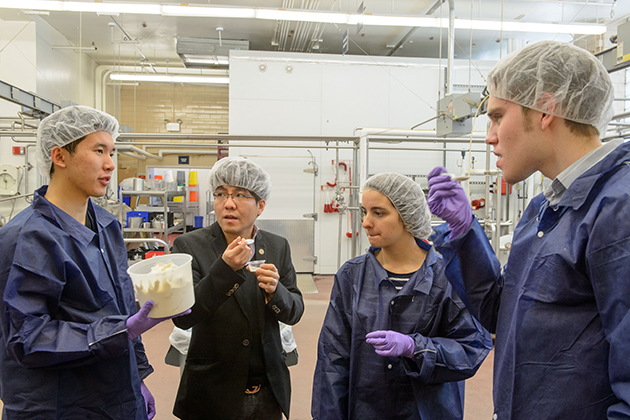
Click here for the entire story:
Engineering Ice Cream, University of Connecticut
http://today.uconn.edu/blog/2015/04/engineering-ice-cream/
The following video reveals the real works in an ice-cream factory
Inside the Blue Bell Ice Cream Factory
Image source: Youtube
Open questions: seeking a holistic approach for mitochondrial research

Correspondence: Heidi M McBride heidi.mcbride@mcgill.ca
Montreal Neurological Institute, McGill University, 3801 University Avenue, Rm 622C H3A 2B4, Montreal H3A 0G4, QC, Canada
BMC Biology 2015, 13:8 doi:10.1186/s12915-015-0120-x
[More about author]

Collaborate
Most of us are not geniuses, and cannot operate with an encyclopaedic knowledge of metabolism, calcium homeostasis, tissue physiology, bioenergetics and lipid chemistry. On the other hand, clinician scientists or physiologists who hope to incorporate mitochondria into their signalling paradigms feel overwhelmed with the complexity of the organelle, the experimental approaches, and sometimes, the dogma common to such established fields. The first step is an obvious one - forge meaningful collaborations that will truly push the field forward. I think we are finally past the point where non-mitochondrial scientists simply write us off, assuming that the mitochondria are a known entity, uninteresting, boring. Indeed the potential for fundamental new concepts in mitochondrial function has never been higher, and the disease relevance is clear. Mitochondrial pathways are practically untouched as a therapeutic target, for example.
For those of us working on the fundamental aspects of mitochondrial function, we must work harder to consider the physiology of real tissues. I’m not suggesting we abandon our fundamental projects, certainly not! Basic discoveries will remain the lifeblood of clinical development. But with collaborations we can extend our studies simultaneously and move into ‘real’ cells. Adapting these models will more rapidly push our discoveries up the ladder of biomedical translation. My own collaborations have provided me with confidence and helped me to understand complex physiologies that would otherwise have not crossed my radar screen. It sounds obvious, but funding agencies and promotion mechanisms do not always reward collaborations enough. Grants need a single principal applicant and team grants can be more political than functional. It is also clear that collaborations are more difficult than simply continuing along a successful, independent track. However, understanding the complexities of mitochondrial function and signalling will require open, and sometimes challenging, collaborations.
The electronic version of this article is the complete one and can be found online at: http://www.biomedcentral.com/1741-7007/13/8
There is an interesting video on Youtube about mitochondria!! - "Power Pack - The Mitochondria Rock Song"
image source: Blame it On Your Mother
Nanyang Technological University produced a 3D printed concept car

Of course this is not the first 3D printer car, but it is good to see a group of students from Nanyang Technological University to get it done.
They are NTU Venture 8 & NTU Venture 9, both with round 150 parts are 3D-pritned.
For the NTU Venture 8, honeycomb structure and a unique joint design was employed, to ensure the car doesn't come apart. Also, the car chassis is see-through when hit by the light at the right angle. Presumably, most of the light will be absorbed by the solar cells so that the inside of the car doesn't heat up overmuch during summer.

NTU Venture (NV) 9, a slick three-wheeled racer which can take sharp corners with little loss in speed due to its unique tilting ability inspired by motorcycle racing.

NTU unveils Singapore’s first 3D-printed concept car
3D-printed green vehicle to blaze a trail for future car technology
This first 3D printed car is like this:
image source: straitstimes
Gold Nano Particles

Tiny treasure: The future of nano-gold @ Youtube
Below is a collection of Nature articles (seem free to access):
The promoting effect of adsorbed carbon monoxide on the oxidation of alcohols on a gold catalyst
Paramaconi Rodriguez, Youngkook Kwon & Marc T. M. Koper
Nature Chemistry 4, 177–182 (11 December 2011)
Nanoparticles that communicate in vivo to amplify tumour targeting
Geoffrey von Maltzahn, Ji-Ho Park, Kevin Y. Lin, Neetu Singh, Christian Schwöppe + et al.
Nature Materials 10, 545–552 (19 June 2011)
Optical detection of single non-absorbing molecules using the surface plasmon resonance of a gold nanorod
Peter Zijlstra, Pedro M. R. Paulo & Michel Orrit
Nature Nanotechnology 7, 379–382 (15 April 2012)
A high-throughput drug screen for Entamoeba histolytica identifies a new lead and target
Anjan Debnath, Derek Parsonage, Rosa M Andrade, Chen He, Eduardo R Cobo + et al.
Nature Medicine 18, 956–960 (20 May 2012)
An invisible metal–semiconductor photodetector
Pengyu Fan, Uday K. Chettiar, Linyou Cao, Farzaneh Afshinmanesh, Nader Engheta + et al. Nature Photonics 6, 380–385 (20 May 2012)
image source: Gold nanoparticles help detect Listeria cheaply
What is photonics?

"Photonics is the science of light. It is the technology of generating, controlling, and detecting light waves and photons, which are particles of light. The characteristics of the waves and photons can be used to explore the universe, cure diseases, and even to solve crimes. Scientists have been studying light for hundreds of years. The colors of the rainbow are only a small part of the entire light wave range, called the electromagnetic spectrum. Photonics explores a wider variety of wavelengths, from gamma rays to radio, including X-rays, UV and infrared light.
It was only in the 17th century that Sir Isaac Newton showed that white light is made of different colors of light. At the beginning of the 20th century, Max Planck and later Albert Einstein proposed that light was a wave as well as a particle, which was a very controversial theory at the time. How can light be two completely different things at the same time? Experimentation later confirmed this duality in the nature of light. The word Photonicsappeared around 1960, when the laser was invented by Theodore Maiman.
Even if we cannot see the entire electromagnetic spectrum, visible and invisible light waves are a part of our everyday life. Photonics is everywhere; in consumer electronics (barcode scanners, DVD players, remote TV control), telecommunications (internet), health (eye surgery, medical instruments), manufacturing industry (laser cutting and machining), defense and security (infrared camera, remote sensing), entertainment (holography, laser shows), etc.
All around the world, scientists, engineers and technicians perform cutting edge research surrounding the field of Photonics. The science of light is also actively taught in classrooms and museums where teachers and educators share their passion for this field to young people and the general public. Photonics opens a world of unknown and far-reaching possibilities limited only by lack of imagination."
Photonics technologies are everywhere!
there are more videos about IYL 2015 here:
http://www.light2015.org/Home/About/Resources/Videos.html
and you can learn more about light here:
http://www.light2015.org/Home/LearnAboutLight.html
About IYL 2015:
"The International Year of Light and Light-Based Technologies (IYL 2015) is a global initiative adopted by the United Nations to raise awareness of how optical technologies promote sustainable development and provide solutions to worldwide challenges in energy, education, agriculture, communications and health."
"IYL 2015 is endorsed by a number of international scientific unions and the International Council of Science, and has more than 100 partners from more than 85 countries. Founding Scientific Sponsors of IYL 2015 are the American Physical Society (APS); The American Institute of Physics (AIP); the European Physical Society (EPS); the IEEE Photonics Society (IPS); SPIE, the international society for optics and photonics; the Lightsources.org International Network; the Institute of Physics (IOP); and The Optical Society (OSA)."
image source: http://www.lighting-inspiration.com/iyl2015/
Tag :
youtube,
Need help Studying chemistry? Try Interactive Periodic Table

How many elements you have to learn from high school? Let's review them for your PhD with the following periodic table:

http://www.rsc.org/periodic-table

http://www.chemnetbase.com/PeriodicTable/index.jsf

Thank you Prof. Martyn Polikaoff and his team at the University of Nottingham.
More about Prof. Polikaoff:
http://www.bradyharanblog.com/blog/2014/12/30/sir-martyn-poliakoff
image source: www.chemnetbase.com, www.rsc.org/periodic-table, www.periodicvideos.com,
Science's Breakthrough of the Year 2014!


Enjoy the Youtube below:
You can find the complete description in below:
- Comet Breakthrough of the Year + People's choice
- Cooperative ‘bots’ don't need a boss
- The birth of birds
- Youth serum for real?
- Chips that mimic the brain
- Cells that might cure diabetes
- Europe's cave art has a rival
- Manipulating memory
- Giving life a bigger genetic alphabet
- The rise of the CubeSat
image source: runners-up, science
What is Software Engineering (軟體工程)?

Let's see how University of Oxford defines "Software Engineering"
"Software Engineering is the application of scientific and engineering principles to the development of software systems—principles of design, analysis, and management—with the aim of:
- developing software that meets its requirements, even when these requirements change;
- completing the development on time, and within budget;
- producing something of lasting value—easy to maintain, re-use, and re-deploy."
extracted from:
A full picture is explained in detail on the site University of Canterbury:


or you can find one in Chinese by National Chin-Yi University of Technology, Taiwan
Youtube: Computer Science Field Guide: Software Engineering
Your support will help people suffering from Parkinson's Disease: Liftware

If there is any one find himself/herself difficult in eating because of tremor (Parkinson's Disease), I believe Liftware will be a good solution!!
Take a look how it work in the following movies:
Liftware successfully got funded at Indiegogo (https://www.indiegogo.com/projects/lift-labs-march-match) and I hope this innovative device soon come to every people with hand tremor and let them enjoy their meals.
more about Liftware:
"We are a group of scientists and engineers working to develop new technologies to provide proactive care for people with essential tremor and Parkinson's Disease.
Seeing our own friends and family suffering has motivated us to create Lift Labs and focus on improving overall quality of life and independence.
We're joining Google[x] and will continue to make and sell our Liftware stabilizers. We could not have reached this point without the support of Rock Health, the National Institutes of Health, our customers and the hard work of our team. We're especially excited to work with the Google team to scale our operations and reach even more people who could benefit from using tremor-canceling devices. "
- http://www.liftlabsdesign.com
Invisibility cloak and metamaterials
What will you do if you are able to "disappear" or "invisible"?

A specially designed metamaterial may help you realize this. Prof. Sir John Pendry explained the idea in an article "Controlling Electromagnetic Fields" in 2006:
"Using the freedom of design that metamaterials provide, we show how electromagnetic fields can be redirected at will and propose a design strategy. The conserved fields—electric displacement field D, magnetic induction field B, and Poynting vector B—are all displaced in a consistent manner. A simple illustration is given of the cloaking of a proscribed volume of space to exclude completely all electromagnetic fields. Our work has relevance to exotic lens design and to the cloaking of objects from electromagnetic fields."
More about Prof. Sir John Pendry, Imperial Collage
Today’s physics news: Sir John Pendry awarded Newton Medal, IOP
A nice article can be found here: Metamaterials and the Science of Invisibility, the Quantumtunnel
A simple drawing illustrate the basic principle here:

But how metamaterials related to visibility? Listen to Prof. John Pendry at Youtube:
image source: Improved invisibility cloak tames light
A specially designed metamaterial may help you realize this. Prof. Sir John Pendry explained the idea in an article "Controlling Electromagnetic Fields" in 2006:
"Using the freedom of design that metamaterials provide, we show how electromagnetic fields can be redirected at will and propose a design strategy. The conserved fields—electric displacement field D, magnetic induction field B, and Poynting vector B—are all displaced in a consistent manner. A simple illustration is given of the cloaking of a proscribed volume of space to exclude completely all electromagnetic fields. Our work has relevance to exotic lens design and to the cloaking of objects from electromagnetic fields."
More about Prof. Sir John Pendry, Imperial Collage
Today’s physics news: Sir John Pendry awarded Newton Medal, IOP
A nice article can be found here: Metamaterials and the Science of Invisibility, the Quantumtunnel
A simple drawing illustrate the basic principle here:
Complete story can be found: INVISIBILITY CLOAKS: NOW YOU SEE IT, NOW YOU DON’T.
But how metamaterials related to visibility? Listen to Prof. John Pendry at Youtube:
Btw, Prof. Howell and his research group at the University of Rochester discovered a cloaking trick with only four lenses. They called it "the Rochester Clock":
image source: Improved invisibility cloak tames light
LEGO and Scientific Researches
LEGO is my favorite toy when I was a kid. I enjoyed to build different spaceships and features with my limited Lego blocks. It was fun and and full of creation.

There are many different variations and products now for Lego. However, its' flexibility and simplicity (as basic building block) are remain unchanged. These allows researchers to easily build their own scientific tools for scientific experiments. But besides building robots, what else Lego can help researchers?
Take a look and see if they can inspire you something... Iowa State engineers turn LEGO bricks into a scientific tool to study plant growth
![]()

Growing bones with Lego

The University of Glasgow Raspberry Pi Cloud project

LEGO® AFM
Lego for the Lab
LEGO Pirate Proves Existence of Super Wave
Robotics with LEGO
Using LEGO® to simulate ESA's touchdown on a comet
A LEGO Counting problem

Soft machines made like Lego

image source: Move Over, Boys: Lego Releases Female Scientist Playset
There are many different variations and products now for Lego. However, its' flexibility and simplicity (as basic building block) are remain unchanged. These allows researchers to easily build their own scientific tools for scientific experiments. But besides building robots, what else Lego can help researchers?
Take a look and see if they can inspire you something... Iowa State engineers turn LEGO bricks into a scientific tool to study plant growth

Growing bones with Lego

The University of Glasgow Raspberry Pi Cloud project

LEGO® AFM
Lego for the Lab
LEGO Pirate Proves Existence of Super Wave
Robotics with LEGO
Using LEGO® to simulate ESA's touchdown on a comet
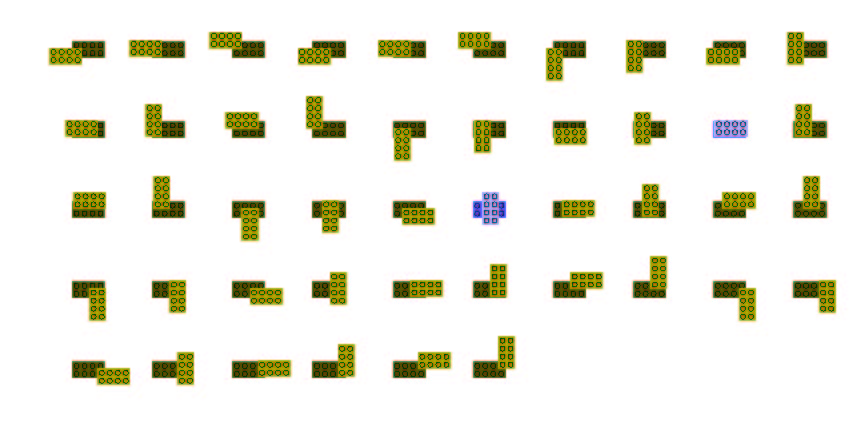
Soft machines made like Lego

image source: Move Over, Boys: Lego Releases Female Scientist Playset
Carbon Dioxide Emission Pattern in one Year - the US, China, and Europe are the main polluters

Scientists at NASA modelling the movement of carbon dioxide in a year. In the video, as expected, the US, China, and Europe are clearly revealed as the main polluters. Watch the Youtube video below:
Here are some other findings in the video:
"Earth's carbon dioxide levels peak in the spring, and then drop in summer, when Northern Hemisphere plant growth absorbs gas from the atmosphere"
"In North America, the major emissions sources are in the Midwest and along the East Coast. Westerly winds in the Gulf Stream carry the greenhouse gas eastward over the Atlantic Ocean, the model shows"
"In Asia, the Himalayas block and divert winds that swirl around the high mountains. East of the Himalayas, these winds pick up carbon dioxide emissions from the industrialized Asian countries and carry the gas toward the Pacific Ocean"
"In the Southern Hemisphere, plumes of carbon dioxide and carbon monoxide rise from forest fires in South America and southern Africa"
Check the complete news on "Watch Carbon Pollution Spread Across the Planet"@ livescience.com
Landing on a comet - Rosetta and Philae
It is a historical moment after Philae vehicle landed successfully onto Comet 67P/Churyumov-Gerasimenko's surface.

Rosetta satellite has flown for 10 years. How the technology 10 years ago achieve this mention?
Take a look here:
The Rosetta Lander
PHILAE’S MISSION AT COMET 67P
However, the landing is not that smooth and Philae bounced twice and now located under a permanently shadow of a cliff, making it hard to gain enough sunlight for its power.
image source http://www.esa.int/Our_Activities/Space_Science/Rosetta/The_Rosetta_lander
Rosetta satellite has flown for 10 years. How the technology 10 years ago achieve this mention?
Take a look here:
The Rosetta Lander
PHILAE’S MISSION AT COMET 67P
Here is another interesting video by ESA:
- Using LEGO® to simulate ESA's touchdown on a comet
However, the landing is not that smooth and Philae bounced twice and now located under a permanently shadow of a cliff, making it hard to gain enough sunlight for its power.
image source http://www.esa.int/Our_Activities/Space_Science/Rosetta/The_Rosetta_lander
What is gutter oil 地溝油?
Gutter oil (地溝油) is recently one of the hottest topics in Taiwan, Hong Kong, and Macau. Related news have been reported almost everyday...
Related news:
Taiwan’s ‘Gutter Oil’ Scandal, The New York Times
Taiwan gutter oil scandal spreads to Hong Kong, Business Insider
China probes 'gutter oil in medicine' claims, BBC News

Gutter oil = germy + carcinogenic
Gutter oil, or illegal cooking oil, is secondhand oil refined from cooking waste, gutters, drains, and animal fat. Through a series of simple processes, such as collection, preliminary filtration and boiling, refining, and the removal of adulterants, illegal gutter oil is packed and sold to low-end restaurants
Gutter oil may contain toxic substances ranging from harmful bacteria to heavy metals and fatty acids. The illegal use of gutter oil as cooking oil raised the food safety fear once again in these regions.
Take a quick look on Youtube "Gutter oil: explained"
Related news:
Taiwan’s ‘Gutter Oil’ Scandal, The New York Times
Taiwan gutter oil scandal spreads to Hong Kong, Business Insider
China probes 'gutter oil in medicine' claims, BBC News
Gutter oil = germy + carcinogenic
Gutter oil, or illegal cooking oil, is secondhand oil refined from cooking waste, gutters, drains, and animal fat. Through a series of simple processes, such as collection, preliminary filtration and boiling, refining, and the removal of adulterants, illegal gutter oil is packed and sold to low-end restaurants
Gutter oil may contain toxic substances ranging from harmful bacteria to heavy metals and fatty acids. The illegal use of gutter oil as cooking oil raised the food safety fear once again in these regions.
Take a quick look on Youtube "Gutter oil: explained"
What is Higgs boson?
Few days ago there was a news report about Higgs boson by Stephen Hawking - Stephen Hawking Fears Higgs Boson Doomsday, and He's Not Alone.

To understand what is Higgs boson, I tried to find more information on internet. The concept of Higgs boson is so difficult and hard to be explained to you and me, if you are not a physician neither, in a simple way.
The hidden symmetry and Mr. Higgs! - Cornell University Library, Open Access
The Higgs Particle: what is it, and why did it lead to a Nobel Prize in Physics? - Cornell University Library, Open Access
The Higgs: so simple yet so unnatural - Cornell University Library, Open Access
The Physics of the Higgs-like Boson - Cornell University Library, Open Access
Still no idea? try youtube...
The basics of the Higgs boson - Dave Barney and Steve Goldfarb
Higgs boson explained in 120 seconds - BBC Radio 4 - BBC News
image source: http://blog.sciencemuseum.org.uk/insight/tag/higgs-boson/
To understand what is Higgs boson, I tried to find more information on internet. The concept of Higgs boson is so difficult and hard to be explained to you and me, if you are not a physician neither, in a simple way.
The hidden symmetry and Mr. Higgs! - Cornell University Library, Open Access
The Higgs Particle: what is it, and why did it lead to a Nobel Prize in Physics? - Cornell University Library, Open Access
The Higgs: so simple yet so unnatural - Cornell University Library, Open Access
The Physics of the Higgs-like Boson - Cornell University Library, Open Access
Still no idea? try youtube...
The basics of the Higgs boson - Dave Barney and Steve Goldfarb
Higgs boson explained in 120 seconds - BBC Radio 4 - BBC News
The Hunt For Higgs - Documentary
CERN Experiment
Methane hydrate from the ocean

There is an article from NBC this morning "Climate Bomb? Methane Vents Bubble on Seafloor off east Coast: Study". It reports the possible methane leakage at the Altantic Ocean along the U.S. East Coast. The phase "Climate BOMB" caught my eyes. Definitely, on the bright side, scientists and engineers have been trying to catch this "BUBBLES" for our daily energy consumption.
Here is another article suggested about methane hydrates from BBC:
Methane hydrate: Dirty fuel or energy saviour?
Here are brief summaries about methane hydrates:
Climate change impacts on methane hydrates [worldoceanreview.com]
Methane Hydrates and Contemporary Climate Change [Nature.com]
Towards Safer, More Comfortable Living through Shimizu's Sustained, Long-Term Research Efforts [www.shimz.co.jp]
More about Methane Hydrate on Youtube:
Methane hydrate the clean fuel of the future?
Japan successfully extracts gas from offshore methane hydrate
Did Methane Cause Mass Extinction? HD
image source: www.oilfreefun.com/2013/02/methane-hydrate-releases-geoengineering.html, www.nature.com/scitable/knowledge/library/methane-hydrates-and-contemporary-climate-change-24314790
Crystallography? maybe a photo competition helps to explain crystallography in your daily life
Do you know what is crystallography? Do you the year 2014 is the International Year of Crystallography 2014?

If you don't know what is crystallography, the follow articles are suggested:
Crystallography: Atomic secrets, NATURE
More on Youtube:
Celebrating Crystallography - An animated adventure
Understanding Crystallography - Part 1: From Proteins to Crystals
Understanding Crystallography - Part 2: From Crystals to Diamond
There are a lot of activities around to the world this year to celebrate the International Year of Crystallography 2014. A photo contest - Crystallography in Everyday Life - was completed successfully and the first prize was announced: Gingerbread Men and Ice Crystals won the Agilent Prize:


Want to see more:
image source: http://www.iycr2014.org/participate/photo-competition
A brain-inspired computer & a IBM chip with NO clock
See how IBM redefine information processing with a cognitive chip - TrueNorth.

"Unlike the prevailing von Neumann architecture—but like the brain—TrueNorth has a parallel, distributed, modular, scalable, fault-tolerant, flexible architecture that integrates computation, communication, and memory and has no clock."
features at a glance:
"The architecture can solve a wide class of problems from vision, audition, and multi-sensory fusion, and has the potential to revolutionize the computer industry by integrating brain-like capability into devices where computation is constrained by power and speed" - Dharmendra Modha, IBM Fellow
see more:
Introducing a Brain-inspired Computer
Brain Power
Cognitive computing
IBM Research Creates New Foundation to Program SyNAPSE Chips
image source: http://www.research.ibm.com/articles/brain-chip.shtml
"Unlike the prevailing von Neumann architecture—but like the brain—TrueNorth has a parallel, distributed, modular, scalable, fault-tolerant, flexible architecture that integrates computation, communication, and memory and has no clock."
features at a glance:
- One million individually programmable neurons--sixteen times more than the current largest neuromorphic chip
- 256 million individually programmable synapses on chip which is a new paradigm
- 5.4B transistors. By device count, largest IBM chip ever fabricated, second largest (CMOS) chip in the world
- 4,096 parallel and distributed cores, interconnected in an on-chip mesh network
- Over 400 million bits of local on-chip memory (~100 Kb per core) to store synapses and neuron parameters
"The architecture can solve a wide class of problems from vision, audition, and multi-sensory fusion, and has the potential to revolutionize the computer industry by integrating brain-like capability into devices where computation is constrained by power and speed" - Dharmendra Modha, IBM Fellow
see more:
Introducing a Brain-inspired Computer
Brain Power
Cognitive computing
IBM Research Creates New Foundation to Program SyNAPSE Chips
image source: http://www.research.ibm.com/articles/brain-chip.shtml
Move a Paralyzed Fingers and Hand
It is amazing to see how the advancement in neuroengineering is now being implemented into medical surgery. This time, a tiny chip bring the signal from a user's brain to his paralyzed arm, bypass the damaged spinal code, and control the movement of his fingers:

"Ian Burkhart, a 23-year-old quadriplegic from Dublin, Ohio, is the first patient to use Neurobridge, an electronic neural bypass for spinal cord injuries that reconnects the brain directly to muscles, allowing voluntary and functional control of a paralyzed limb."
for details:
For the first time, a paralyzed man can move his fingers and hand with his own thoughts…
Watch Youtube:
 image source: www.battelle.org, medicalcenter.osu.edu
"Ian Burkhart, a 23-year-old quadriplegic from Dublin, Ohio, is the first patient to use Neurobridge, an electronic neural bypass for spinal cord injuries that reconnects the brain directly to muscles, allowing voluntary and functional control of a paralyzed limb."
for details:
For the first time, a paralyzed man can move his fingers and hand with his own thoughts…
Watch Youtube:
