


Move a Paralyzed Fingers and Hand
It is amazing to see how the advancement in neuroengineering is now being implemented into medical surgery. This time, a tiny chip bring the signal from a user's brain to his paralyzed arm, bypass the damaged spinal code, and control the movement of his fingers:

"Ian Burkhart, a 23-year-old quadriplegic from Dublin, Ohio, is the first patient to use Neurobridge, an electronic neural bypass for spinal cord injuries that reconnects the brain directly to muscles, allowing voluntary and functional control of a paralyzed limb."
for details:
For the first time, a paralyzed man can move his fingers and hand with his own thoughts…
Watch Youtube:
 image source: www.battelle.org, medicalcenter.osu.edu
"Ian Burkhart, a 23-year-old quadriplegic from Dublin, Ohio, is the first patient to use Neurobridge, an electronic neural bypass for spinal cord injuries that reconnects the brain directly to muscles, allowing voluntary and functional control of a paralyzed limb."
for details:
For the first time, a paralyzed man can move his fingers and hand with his own thoughts…
Watch Youtube:

Fields Medalist Announced in Seoul ICM 2014. Congratulation to all winners

There are four winners for Fields Medal in 2014. They are:
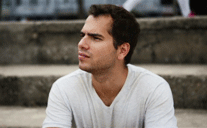
CNRS, France & IMPA, Brazil
for his profound contributions to dynamical systems theory have changed the face of the field, using the powerful idea of renormalization as a unifying principle.
- Renormalization [Encyclopedia of Mathematics]
========================================================================

Princeton University, USA
for developing powerful new methods in the geometry of numbers and applied them to count rings of small rank and to bound the average rank of elliptic curves.
- Geometry of numbers [Encyclopedia of Mathematics]
========================================================================

University of Warwick, UK
for his outstanding contributions to the theory of stochastic partial differential equations, and in particular created a theory of regularity structures for such equations.
========================================================================
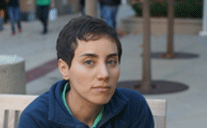
Stanford University, USA
for her outstanding contributions to the dynamics and geometry of Riemann surfaces and their moduli spaces.
- Riemann surfaces [Encyclopedia of Mathematics]
Check ICM2014 for more descriptions about their researches.
image source: www.icm2014.org
Google[x] Developed Contact Lens Measure Blood Glucouse
Google and Novartis are now working together to develop Google[x] smart contact lens into wearable blood glucose sensors, helping thousands patients suffering from diabetes.
How it works?

"We’re now testing a smart contact lens that’s built to measure glucose levels in tears using a tiny wireless chip and miniaturized glucose sensor that are embedded between two layers of soft contact lens material. We’re testing prototypes that can generate a reading once per second. We’re also investigating the potential for this to serve as an early warning for the wearer, so we’re exploring integrating tiny LED lights that could light up to indicate that glucose levels have crossed above or below certain thresholds."
Does it mean your eye will change color?
Btw, what is the chemistry inside the lens that allows continuous blood glucose level monitoring?

Related News:
image source: http://www.dailymail.co.uk/sciencetech/article-2693326/Googles-smart-contact-lenses-coming-eye-near-soon-Lenses-diabetics-farsighted-set-production.html
How it works?
"We’re now testing a smart contact lens that’s built to measure glucose levels in tears using a tiny wireless chip and miniaturized glucose sensor that are embedded between two layers of soft contact lens material. We’re testing prototypes that can generate a reading once per second. We’re also investigating the potential for this to serve as an early warning for the wearer, so we’re exploring integrating tiny LED lights that could light up to indicate that glucose levels have crossed above or below certain thresholds."
Does it mean your eye will change color?
Btw, what is the chemistry inside the lens that allows continuous blood glucose level monitoring?
Related News:
- Google unveils 'smart contact lens' to measure glucose levels
- Google Smart Contact Lens Focuses On Healthcare Billions
- Google's smart contact lens is coming to an eye near you: Lenses for diabetics and the farsighted to go into production
image source: http://www.dailymail.co.uk/sciencetech/article-2693326/Googles-smart-contact-lenses-coming-eye-near-soon-Lenses-diabetics-farsighted-set-production.html
MIT $100K
It is always excited to see how MIT cultivate entrepreneurship among the MIT students and researchers. This time is MIT $100K. Congratulation to all winners.

"One competition – three contests – from September to May. MIT $100K Entrepreneurship Competition brings together students and researchers in the MIT community and outside to act on their talent, ideas and energy to launch tomorrow’s leading firms. The competition is run as a series of distinct contests – Pitch, Accelerate, and Launch. Each contest focuses on developing specific founding skills and for each contest MIT $100K brings together a network of resources – top venture capitalists, entrepreneurs, media exposure, mentors, educational guidance, networking. Finally over $350K in cash and prizes are awarded to help participants through the new venture construction process."
For more information: www.mit100k.org

image source: mit100k.org
"One competition – three contests – from September to May. MIT $100K Entrepreneurship Competition brings together students and researchers in the MIT community and outside to act on their talent, ideas and energy to launch tomorrow’s leading firms. The competition is run as a series of distinct contests – Pitch, Accelerate, and Launch. Each contest focuses on developing specific founding skills and for each contest MIT $100K brings together a network of resources – top venture capitalists, entrepreneurs, media exposure, mentors, educational guidance, networking. Finally over $350K in cash and prizes are awarded to help participants through the new venture construction process."
For more information: www.mit100k.org
image source: mit100k.org
Ebola 2014
Learn more about Ebola.

Ebola virus disease, WHO
The Ebola virus, Visual Science *****

2014 Ebola Outbreak in West Africa, CDC, US


Ebola virus disease, WHO
- Ebola virus disease (EVD), formerly known as Ebola haemorrhagic fever, is a severe, often fatal illness in humans.
- EVD outbreaks have a case fatality rate of up to 90%.
- EVD outbreaks occur primarily in remote villages in Central and West Africa, near tropical rainforests.
- The virus is transmitted to people from wild animals and spreads in the human population through human-to-human transmission.
- Fruit bats of the Pteropodidae family are considered to be the natural host of the Ebola virus.
- Severely ill patients require intensive supportive care. No licensed specific treatment or vaccine is available for use in people or animals
The Ebola virus, Visual Science *****
2014 Ebola Outbreak in West Africa, CDC, US

Tag :
general,
Five questions that need answering when considering the design of clinical trials
Corresponding author: Hugh Davies hughdavies@nhs.net
Institut für Medizinische Informationsverarbeitung, Biometrie und Epidemiologie (IBE), Faculty of Medicine, Ludwig-Maximilians University, Munich, Germany
Trials 2014, 15:286 doi:10.1186/1745-6215-15-286

----------------------------------------------------------------------------
The electronic version of this article is the complete one and can be found online at: http://www.trialsjournal.com/content/15/1/286
image source: http://www.discoveriesmagazine.org/features/clinical-trials-101-feature/clinical-trials-101.jpg
Institut für Medizinische Informationsverarbeitung, Biometrie und Epidemiologie (IBE), Faculty of Medicine, Ludwig-Maximilians University, Munich, Germany
Trials 2014, 15:286 doi:10.1186/1745-6215-15-286

----------------------------------------------------------------------------
Main text
The HRA Guidance
This HRA guidance poses five questions [4]:
1) Is there a clear research question?
2) Will the proposed study design answer the research question?
3) Are the assumptions used in the sample size calculation appropriate?
4) How will safety and efficacy be monitored during the trial?
5) How will the trial be registered and subsequently published?
Document structure
The HRA guidance is separated into four layers, providing increasing detail, as required. Layer I sets out in tabular form the questions and considerations that researchers, sponsors, peer reviewers and RECs should ask. By clicking over a question or specific words or phrases in the table in Layer I the reader can navigate to a more detailed discussion of the topic in Layer II. From Layer II the reader can navigate to more comprehensive explanations of individual components of the sample size in Layer III. Finally, Layer IV provides explanatory notes on some underlying statistical principles.
The five questions
The HRA guidance is built on the following core concepts: that sound planning is critical to the outcome of an interventional clinical trial and its ethical acceptability (bad science is bad ethics); all trials must be registered; and the results should be published [5,6]. A researcher should identify the primary research question to be answered; explain why it is important to patients and health-care practitioners; show that the study design is appropriate to answer the question posed, in particular that the sample size is likely to be adequate to meet the pre-specified aims of the study; and describe the plan to disseminate the results of the study.
Is there a clear research question?
The definition of the research question is key to research design. All research must have a primary question, clearly stated in advance, and founded on a systematic review of what is already known[5,7-9]. Researchers who plan studies without reviewing what has been done, risk performing research for which the answer is already known or exposing participants to ineffective or an inferior treatment [8-10].
The planning of a clinical trial depends on the primary question, and researchers should clearly and simply explain in the study protocol what the trial is aiming to show, why it is worth asking and, through consultation with public and patient groups, why this is worthwhile to patients. The primary question should be consistently stated throughout the study protocol. Population, intervention, comparator and outcome (PICO) is one useful way of formulating a research question[11].
Will the proposed design answer the research question?
The research protocol should explain how the proposed study methodology is appropriate for the question posed, demonstrate that the design is likely to answer the research question, and why it is the best approach. The design should be underpinned by a systematic review of the existing evidence, which should be reported in the protocol [8,9]. Absence of a systematic review raises the question: what is the design based on?
Unfortunately, our and other research has found that study protocols often lack important information on study design, which hinders external review [2,3,7,12]. The HRA guidance therefore encourages researchers to explain:
• how the proposed research method is appropriate for the question posed
• the reasoning behind the choice of any treatment difference sought, as well as the other parameters used in the determination of the sample size
• how the relevant successes and failures of previous studies have been taken into account in the design of the planned trial
• the reason for the choice of comparators
• the randomisation and blinding methods
• the suitability of the statistical tests
• how the sample to be studied is representative and thus, generalisable to the wider group of patients
Are the assumptions used in the sample size calculation appropriate?
Researchers should provide all the information needed to allow an independent reviewer to both reproduce the target sample size and understand the rationale for the assumptions used in the calculation. The HRA guidance provides a checklist of the information that should be reported in the study protocol for the sample size determination. Each item is linked to more detailed explanations. Specific guidance is given on reporting sample sizes based on confidence intervals, group sequential, factorial, cluster and time-to-event studies.
The sample size determination checklist requests that researchers:
• Explain what the study is aiming to show
• Describe the design of the study
• State clearly the primary outcome measure
• State the test procedure on which the sample size is based
• State the allocation ratio
• State and justify the difference sought, if the study is aiming to show superiority
• State and justify the acceptance margin, if the study is aiming to demonstrate
• non-inferiority or equivalence
• Report all parameters used in the sample size calculation
• Explain the rationale for the parameters used in the sample size calculation
• Describe any procedures to re-estimate the sample size during the study
• Report the Type I error
• Report the Type II error
• Describe any adjustments for multiple testing (multiplicity), if the study has multiple endpoints, interim analyses, or multiple arms
• State the number of patients or events required for the analysis
• Explain the allowance (if any) for dropouts
• State the total number of patients to be enrolled
Particular emphasis is placed on the need to provide a reasoned explanation of why the treatment difference and other design assumptions are plausible for the planned study, taking into account all existing data. The importance of the difference sought, i.e. why it is worthwhile to patients, should also be explained. The justification could include reference to consultations with the public and patient groups, existing literature or published studies in which the minimum clinically important difference has been empirically determined.
Researchers should be rigorous in the determination of design assumptions [1-3]. Sample size re-estimation should be considered if there is a high degree of uncertainty [13]. Manipulating the sample size calculation, sometimes called the sample size ‘game’ or ‘samba’, to produce the desired statistical power by inappropriately overestimating the treatment effect (known as ‘optimism bias’ – the unwarranted belief in the efficacy of new therapies) or underestimating the variability leads to ‘underbuilt’ studies with insufficient power and inconclusive results [14,15]. Such studies are not ethical and waste valuable resources [16-18].
Sample size determinations must be realistic [19]. If the sample size required to detect the treatment difference of interest is unfeasible, then this should be explained in the research protocol. A well-designed and implemented trial, even one with lower power (and precision), will still yield unbiased results, which can be combined with similar unbiased trials in a meta-analysis[14].
How will safety and efficacy be monitored during the trial?
All studies should be monitored for protocol compliance, adverse effects, patient recruitment, etc. If treatment is of long duration then accumulating efficacy data should be monitored for overwhelming evidence of efficacy or harm. No study should continue to recruit patients once the main comparisons have revealed clear-cut differences [5].
The repeated significance testing of accumulating data does have statistical implications [5]. Thus, the research protocol should describe how multiple testing has been accounted for in the sample size determination [2,3,7]. If there is a great deal of uncertainty surrounding the design assumptions then researchers are asked to consider re-estimating the sample size during the course of the study.
How will the trial be registered and subsequently published?
For clinical trials, HRA has now established that a favourable REC opinion is contingent upon trial registration in publicly accessible databases, unless acceptable reasons are provided for not doing so. The REC also needs to be assured that results will be placed in the public domain. Researchers are expected to:
• publish their results in full and in a reasonable timescale, even when they do not match expectations
• follow reporting guidelines for clinical trials (e.g., CONSORT [20])
• discuss their findings in the context of an updated systematic review of relevant research
• provide their results to others doing systematic reviews of similar topics
The electronic version of this article is the complete one and can be found online at: http://www.trialsjournal.com/content/15/1/286
image source: http://www.discoveriesmagazine.org/features/clinical-trials-101-feature/clinical-trials-101.jpg
DDT, epigenetic harm, and transgenerational environmental justice
Corresponding author: Michael K Skinner skinner@wsu.edu
Center for Reproductive Biology, School of Biological Sciences, Washington State University, Pullman, WA, USA
Environmental Health 2014, 13:62 doi:10.1186/1476-069X-13-62

Abstract
Although the environmentally harmful effects of widespread dichlorodiphenyltrichloroethane (DDT) use became well-known following Rachel Carson’s Silent Spring (1962), its human health effects have more recently become clearer. A ban on the use of DDT has been in place for over 30 years, but recently DDT has been used for malaria control in areas such as Africa. Recent work shows that DDT has transgenerational effects in progeny and generations never directly exposed to DDT. These effects have health implications for individuals who are not able to have any voice in the decision to use the pesticide. The transgenerational effects of DDT are considered in light of some widely accepted ethical principles. We argue that this reframes the decision to use DDT, requiring us to incorporate new considerations, and new kinds of decision making, into the deliberative process that determines its ongoing use. Ethical considerations for intergenerational environmental justice are presented that include concern and respect for autonomy, nonmaleficence, and justice. Here, we offer a characterization of the kinds of ethical considerations that must be taken into account in any satisfactory decisions to use DDT.
The electronic version of this article is the complete one and can be found online at: http://www.ehjournal.net/content/13/1/62
image source: https://notendur.hi.is/thorstur/research/environment/ddt/index.htm
Center for Reproductive Biology, School of Biological Sciences, Washington State University, Pullman, WA, USA
Environmental Health 2014, 13:62 doi:10.1186/1476-069X-13-62
Abstract
Although the environmentally harmful effects of widespread dichlorodiphenyltrichloroethane (DDT) use became well-known following Rachel Carson’s Silent Spring (1962), its human health effects have more recently become clearer. A ban on the use of DDT has been in place for over 30 years, but recently DDT has been used for malaria control in areas such as Africa. Recent work shows that DDT has transgenerational effects in progeny and generations never directly exposed to DDT. These effects have health implications for individuals who are not able to have any voice in the decision to use the pesticide. The transgenerational effects of DDT are considered in light of some widely accepted ethical principles. We argue that this reframes the decision to use DDT, requiring us to incorporate new considerations, and new kinds of decision making, into the deliberative process that determines its ongoing use. Ethical considerations for intergenerational environmental justice are presented that include concern and respect for autonomy, nonmaleficence, and justice. Here, we offer a characterization of the kinds of ethical considerations that must be taken into account in any satisfactory decisions to use DDT.
The electronic version of this article is the complete one and can be found online at: http://www.ehjournal.net/content/13/1/62
image source: https://notendur.hi.is/thorstur/research/environment/ddt/index.htm
Bagel & Mathematics
Today I would like to introduce a special slice method for your Bagel. I haven't tried it yet since I seldom have Bagel for my breakfast. But this is really interesting if you understand the mathematical side of it.

Try and show this to you family & lovers in the morning and add your own descriptions.
I copied the mathematical diagram here and see if you could find the secret behind. If not, you can find the complete story on Mathematics & Nature - Mathematically Correct Breakfast - How to Slice a Bagel into Two Linked Halves

Try and show this to you family & lovers in the morning and add your own descriptions.
I copied the mathematical diagram here and see if you could find the secret behind. If not, you can find the complete story on Mathematics & Nature - Mathematically Correct Breakfast - How to Slice a Bagel into Two Linked Halves
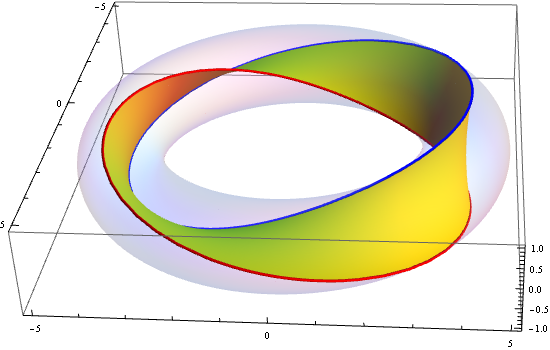
image source: Mathematics & Nature
Tag :
general,
Birds and Dinosaurs and Transformers
Dinosaurs was one of my interests when I was a kids, like most of the boys. A recent article published in Science visualized the relationship of dinosaurs and birds - a very cool illustration.


Science, Vol. 345 no. 6196 pp. 562-566
According to the article, the evolution took more than 500 million years. However, Transformers shows this kind of "transformation" in seconds, and more advanced...
Image Source: www.bbc.co.uk/nature/28563682
Smart Living Challenge 2014
An international "startup" competition is hold by Swedish Institute in 2014. "SMART LIVING CHALLENGE" focus on sustainable housing, transport and food supply.
"Let us use all the technology, innovative drive and competence at our disposal to encourage the development of urban lifestyles in which sustainable solutions are both attractive and profitable. Solutions where design and technology, nature and efficiency go hand in hand."

Unlike typical startup contest, contestant only need to submit a 60 second video. Let's take a look how they presenting their smart ideas:

(screenshot)
For details:
image source: 2014.smartlivingchallenge.com
Tag :
startups,